Check out these popular conversations from my community

Powered by BlogFrog

Monday, November 26, 2012

Prairie Wind

Flint Hills, Kansas (Source: Wikimedia Commons)

I grew up in Kansas. I consider myself a Kansas girl even though I've not lived there for nearly 30 years.  

If you've never lived near the open prairies, you can't begin to understand the winds of them. 

With no trees to break it, the wind buffets you everywhere you go. 

My high school was made up of many different buildings--one per subject. We left each building after class to walk to another building. To this day I shudder with the winter memory of walking to class in the biting cold Kansas wind. Sometimes the walk took up to seven or more minutes. (Now that school has enclosed all the walking areas!)

What about you? Have you ever experienced a prairie wind? How would you describe it? 

Saturday, November 17, 2012

Charbonneau couldn't swim!

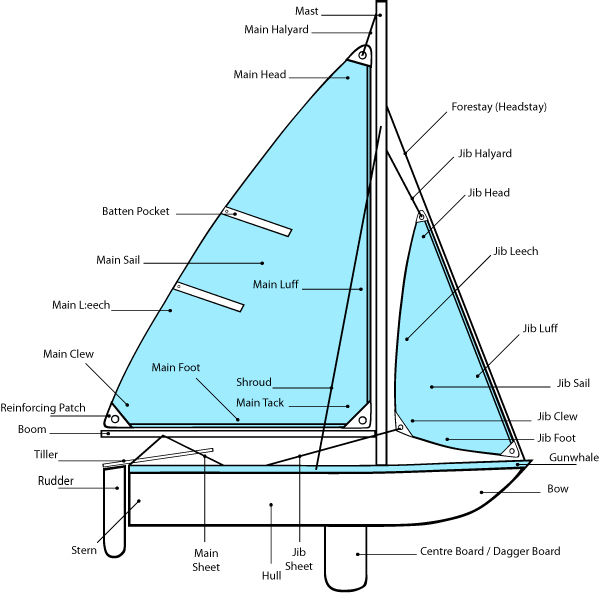
Tiller of a sailboat
When Charbonneau, husband of Sacagawea, was at the tiller of the boat during the Lewis and Clark expedition, a strong wind tipped the boat and Charbonneau panicked. He didn't know how to swim! The fiddle player, Pierre Cruzatte (also known as Peter), who was one of the best boatmen of the expedition, had to threaten to shoot Charbonneau to get him to grab the tiller!


Man steering boat using the tiller


As you can see by the above diagram, the tiller controls the rudder which steers the boat.

Lewis and Clark Artifacts: Writing Desk

Lewis and Clark Artifacts by Chuck_893
Lewis and Clark Artifacts, a photo by Chuck_893 on Flickr.

Mandan Pots

http://www.penn.museum/documents/publications/expedition/PDFs/50-3/Mitchell.pdf
These pots are unusual for their unique two-rim openings and the beautiful details. Click on the picture for more information. It's a .pdf file and may take awhile to load but it's worth it if you're curious about this exquisite art form.

Sending home the artifacts

http://www.news.harvard.edu/gazette/2003/12.11/05-lewisclark.html
When Lewis and Clark and the Corps of Discovery left Fort Mandan, they didn't take everything with them. In fact, they loaded the keelboat with artifacts to be sent back to St. Louis and shipped to Thomas Jefferson. Included in the artifacts was a painted buffalo robe (above) depicting a battle between the Sioux and Arikaras against the Mandans. This robe currently resides at Harvard University. 

Here is a list of things that went aboard the keelboat with Corporal Warfington and his crew back down the Mississippi:

  • Lewis's dried plant specimens 
  • Lewis's "Summary View of Rivers and Creeks"
  • Lewis's "Summary Statement of Rivers, Creeks and Most Remarkable Places"
  • Maps
  • William Clark's journal
  • Seargean Charles Floyd's journal
  • Mineral specimens
  • Astronomical and weather data
  • Muster rolls
  • Accounting records 
  • Skins, bones, antlers, stuffed animals
  • Four live magpies
  • One live sharp-tailed grouse
  • One live prairie dog
  • Clark's description of tribes east of the Rocky Mountains they had met
  • Four boxes and three turnks of Indian artifacts that included a painted buffalo robe, bows and arrows, and a cooking pot.
At Monticello, Thomas Jefferson displayed some of the artifacts in a wing of his home he called "Indian Hall."

http://www.monticello.org/site/jefferson/indian-hall

Friday, November 16, 2012

Western Prairie Rattle Snake (Crotalus viridis viridis)

Western Prairie Rattle Snake (Crotalus viridis viridis) by flyingdoginc

Feb. 11, 1805 - Fort Mandan, North Dakota - Sacagawea gave birth to Jean Baptiste Charbonneau in Fort Mandan, as Lewis recorded: "about five Oclock this evening one of the wives of Charbono was delivered of a fine boy. it is worthy of remark that this was the first child which this woman had boarn, and as is common in such cases her labour was tedious and the pain violent; Mr. Jessome informed me that he had frequently administered a small portion of the rattle of the rattle-snake, which he assured me had never failed to produce the desired effect, that of hastening the birth of the child; having the rattle of a snake by me I gave it to him and he administered two rings of it to the woman broken in small pieces with the fingers and added to a small quantity of water. Whether this medicine was truly the cause or not I shall not undertake to determine but I was informed that she had not taken it more than ten minutes before she brought forth perhaps this remedy may by worthy of future experiments, but I must confess that I want faith as to its efficacy." 

Wednesday, November 14, 2012

Good Trade

When Lewis and Clark set out on their journey west, they took with them gifts for the native peoples they would meet on their way to the Pacific Ocean.

Among these were American flags:


 Peace medals:

Indian artist Paha Ska, of Keystone, S.D., an Elder of the Oglala Sioux tribe from the Pine Ridge Reservation in South Dakota, holds an authentic Presidental Peace & Friendship Medalion from President Thomas Jefferson, Monday, Dec. 17, 2001, during a visit at St. Mary School in Elyria, Ohio, that was given to Indian leaders by the Lewis and Clark Expedition in 1803. Paha Ska, who is about 80 years old, talked about and answered questions about Native Indians. (Photo/Paul M. Walsh)


And brass pots.
littlereview.blogspot.com

Other trinkets they brought with them to trade included:
  • 12 dozen pocket mirrors
  • 4600 sewing needles
  • 144 small sewing scissors
  • 10 pounds of sewing thread
  • Silk ribbons
  • Ivory Combs
  • Handkerchiefs
  • Yards of bright colored cloth
  • Handkerchiefs
  • 130 rolls of tabacco
  • Tomahawks 
  • 288 knives
  • 8 brass kettles
  • Vermillion face paint
  • 20 pounds of assorted beads (mostly blue)
  • 288 brass thimbles
  • Armbands
  • Ear trinkets
What would you take with you to trade?